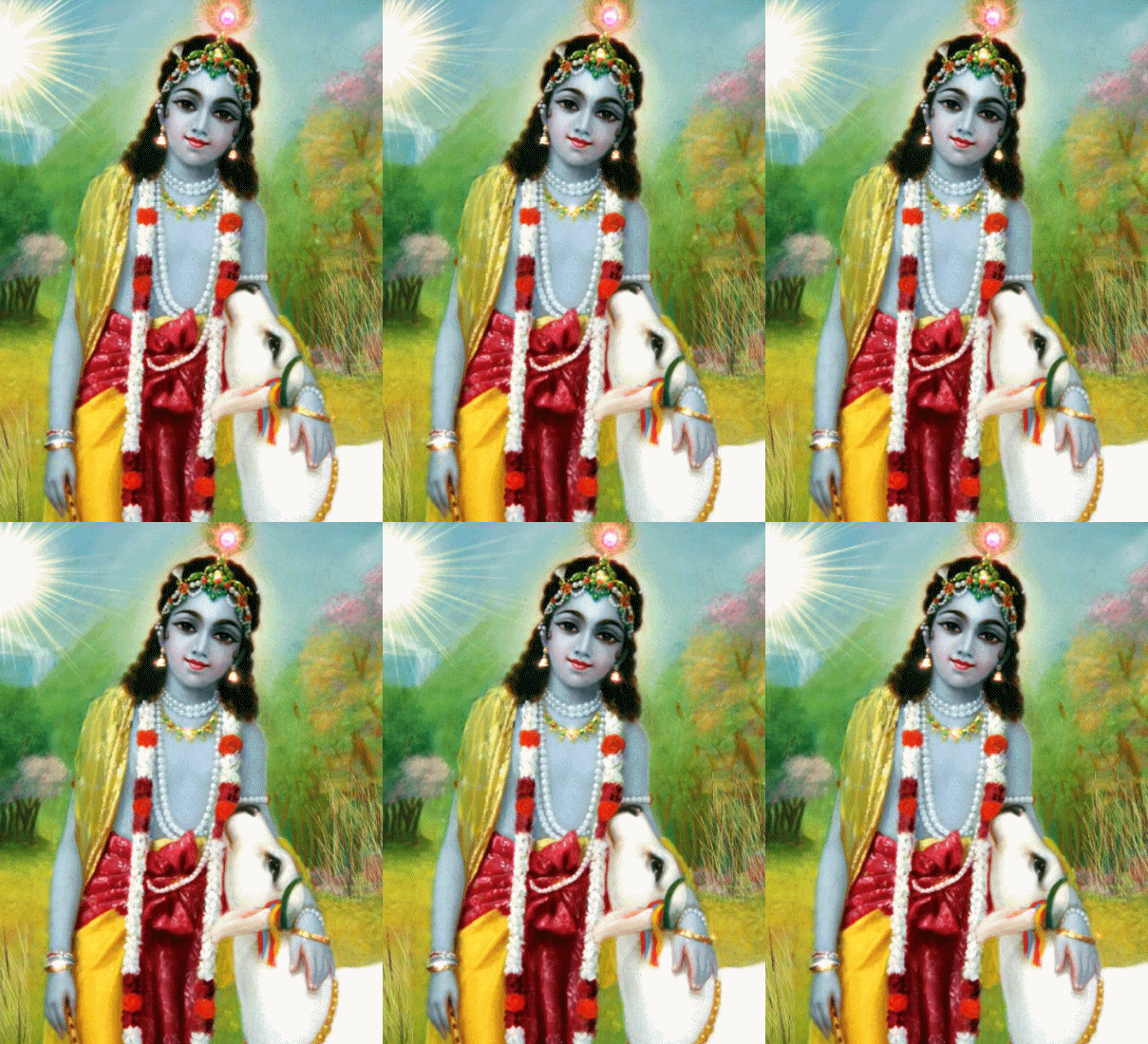
‘When we speak of Himalayas, we refer to the world's highest mountains, of which the highest peak, Mount Everest, is considered to be the culmination. Similarly, becoming Krishna conscious or a Bhakti-yogi is considered as the highest stage of yoga.’
1. We will first analyze the short comings of other yoga systems to ascertain why Bhakti-yoga is superior:
a. Karma-yoga:
- It is impractical for a worker to give up proprietorship over results of his activities without being Krishna Conscious. ‘Only by Krishna Consciousness can one give up the sense of proprietorship.’ (BG 2.48 purport). Secondly, Karma-yoga devoid of Krishna Consciousness provides Brahman realization of the Lord, padam gacchanti anamayam, ‘attaining the position where there are no miseries.’ Therefore it is incomplete. (BG 2.51)
b. Jnana-yoga:
- Knowledge that one is not this material body but spirit soul is not sufficient for liberation. One has to act in the status of spirit soul; otherwise there is no escape from material bondage. Secondly, artificial renunciation of things related to the Supreme Personality of Godhead, thinking them to be material, is imperfect. (BG 5.2 Purport)
c. Dhyana-yoga:
- In this age of Kali, it is impractical to leave home and practice meditation in the jungles without any fear, giving up material desires and practicing celibacy. This yoga system which regulates mode of living, eating, sleeping is inconceivable for modern man. (BG 6.10-14). Arjuna who belonged to the royal patronage, with greater longevity & knowledge, rejected this system of yoga due to its impracticality as the mind is restless and unsteady. If such a system was impractical for Arjuna, so how will it be practical for the common man in this age of quarrel and hypocrisy? (BG 6.33)
2. ‘To go to the hundredth floor, some may use the staircase and some may take an elevator. Similarly, one can go on following all the yoga systems or one can take Krishna Consciousness from the very beginning & take up bhakti-yoga directly.’ (BG 6.46-47, Prabhupad Lecture).
Let’s analyze how bhakti-yoga covers all the components of other yoga systems:
a. Bhakti-yoga contains Karma-yoga:
- ‘Service for the cause of the Lord is called karma-yoga.’ (BG 2.51 Purport). When all our activities, austerities and charities are tad kurusva mad arpanam, ‘offered to the Lord’ then it is perfect Karma-yoga. By acting in this way, a devotee is free from bondage of work and he achieves complete perfection by attaining the Lord, mam upaisyasi. (BG 9.28-29)
b. Bhakti-yoga contains Jnana Yoga:
- A Krishna Conscious person knows fully well that Krishna is the whole and that he is part and parcel of Krishna. Such knowledge is perfect because it is qualitatively and quantitatively correct. He is truly renounced because he employs everything in the service of Krishna knowing well about the different energies of Krishna. (BG Purport 5.2-3). Due to his perfection of knowledge; he is protected from all material contaminations on strength of his devotional service. Therefore he is visiyate, special and the best of all the jnanis. (BG 7.17)
c. Bhakti-yoga contains Dhyana-yoga:
- Samadhi is easily attained by a Krsna Consciousness devotee as his mind and senses are controlled and always fixed on Krishna by following the nine processes of devotional service like hearing, chanting etc. (BG Purport 5.7; 6.34). The best example of such a devotee is Ambarisa Maharaja. (BG 2.61 Purport). Secondly, Ananyas cintayanto mam, meditating on the transcendental form of the Lord/Deity worship also includes unflinching dhyana. (BG 9.22)
Therefore, “Out of all the yogis desiring self-realization, the topmost is one who is constantly devoted to the Lord.” (BG 6.47)
3. Bhakti-yoga is not dependant on any other yoga process.
‘A person who accepts the path of devotional service is not bereft of the results derived from studying the Vedas, performing austere sacrifices, giving charity or pursuing philosophical and fruitive activities. Simply by performing devotional service, he attains all these, and at the end he reaches the supreme eternal abode.’ (BG 8.28) The only qualification is mercy of devotees coming in the form of instructions.
Conclusion: The steady concentration of the mind upon Krishna, or Krishna consciousness, is the highest form of all yoga. (BG Purport 7.1)
1. We will first analyze the short comings of other yoga systems to ascertain why Bhakti-yoga is superior:
a. Karma-yoga:
- It is impractical for a worker to give up proprietorship over results of his activities without being Krishna Conscious. ‘Only by Krishna Consciousness can one give up the sense of proprietorship.’ (BG 2.48 purport). Secondly, Karma-yoga devoid of Krishna Consciousness provides Brahman realization of the Lord, padam gacchanti anamayam, ‘attaining the position where there are no miseries.’ Therefore it is incomplete. (BG 2.51)
b. Jnana-yoga:
- Knowledge that one is not this material body but spirit soul is not sufficient for liberation. One has to act in the status of spirit soul; otherwise there is no escape from material bondage. Secondly, artificial renunciation of things related to the Supreme Personality of Godhead, thinking them to be material, is imperfect. (BG 5.2 Purport)
c. Dhyana-yoga:
- In this age of Kali, it is impractical to leave home and practice meditation in the jungles without any fear, giving up material desires and practicing celibacy. This yoga system which regulates mode of living, eating, sleeping is inconceivable for modern man. (BG 6.10-14). Arjuna who belonged to the royal patronage, with greater longevity & knowledge, rejected this system of yoga due to its impracticality as the mind is restless and unsteady. If such a system was impractical for Arjuna, so how will it be practical for the common man in this age of quarrel and hypocrisy? (BG 6.33)
2. ‘To go to the hundredth floor, some may use the staircase and some may take an elevator. Similarly, one can go on following all the yoga systems or one can take Krishna Consciousness from the very beginning & take up bhakti-yoga directly.’ (BG 6.46-47, Prabhupad Lecture).
Let’s analyze how bhakti-yoga covers all the components of other yoga systems:
a. Bhakti-yoga contains Karma-yoga:
- ‘Service for the cause of the Lord is called karma-yoga.’ (BG 2.51 Purport). When all our activities, austerities and charities are tad kurusva mad arpanam, ‘offered to the Lord’ then it is perfect Karma-yoga. By acting in this way, a devotee is free from bondage of work and he achieves complete perfection by attaining the Lord, mam upaisyasi. (BG 9.28-29)
b. Bhakti-yoga contains Jnana Yoga:
- A Krishna Conscious person knows fully well that Krishna is the whole and that he is part and parcel of Krishna. Such knowledge is perfect because it is qualitatively and quantitatively correct. He is truly renounced because he employs everything in the service of Krishna knowing well about the different energies of Krishna. (BG Purport 5.2-3). Due to his perfection of knowledge; he is protected from all material contaminations on strength of his devotional service. Therefore he is visiyate, special and the best of all the jnanis. (BG 7.17)
c. Bhakti-yoga contains Dhyana-yoga:
- Samadhi is easily attained by a Krsna Consciousness devotee as his mind and senses are controlled and always fixed on Krishna by following the nine processes of devotional service like hearing, chanting etc. (BG Purport 5.7; 6.34). The best example of such a devotee is Ambarisa Maharaja. (BG 2.61 Purport). Secondly, Ananyas cintayanto mam, meditating on the transcendental form of the Lord/Deity worship also includes unflinching dhyana. (BG 9.22)
Therefore, “Out of all the yogis desiring self-realization, the topmost is one who is constantly devoted to the Lord.” (BG 6.47)
3. Bhakti-yoga is not dependant on any other yoga process.
‘A person who accepts the path of devotional service is not bereft of the results derived from studying the Vedas, performing austere sacrifices, giving charity or pursuing philosophical and fruitive activities. Simply by performing devotional service, he attains all these, and at the end he reaches the supreme eternal abode.’ (BG 8.28) The only qualification is mercy of devotees coming in the form of instructions.
Conclusion: The steady concentration of the mind upon Krishna, or Krishna consciousness, is the highest form of all yoga. (BG Purport 7.1)


