
Showing posts with label Nectar from HH Bhakti Charu Swami. Show all posts
Showing posts with label Nectar from HH Bhakti Charu Swami. Show all posts
Saturday, 12 May 2012


HH Bhakti Caru Swami learns Sanskrit

Once I [Bhakti Caru Swami] expressed a desire to learn Sanskrit to Srila Prabhupada. But Srila Prabhupada discouraged me asking, “Why you want to learn Sanskrit?” I gave him various reasons but Srila Prabhupada said, “No, there is no need to learn Sanskrit.” But then he finally said, “You read my books and you will learn Sanskrit.” But then he elaborated, “What is the point in learning Sanskrit? There are so many Sanskrit scholars but what are they doing? They are not doing anything to spread Krsna consciousness or even to spread the glory of Indian culture. They are just learned in Sanskrit and that is about all.” Prabhupada pointed out that our main mission is actually to preach, not to become a big scholar, and he said, “You can preach with whatever you have already learnt. What you learn in the course of preaching, that is another thing, but there is no need to separately learn something in order to preach. Whatever you have learnt is sufficient to preach.” So in this way Srila Prabhupada discouraged me from learning Sanskrit. One day Srila Prabhupada was discussing with Bimalananda Thakura Tirtha. Prabhupada was discussing about the age of Kali, how degraded it would become. Prabhupada wanted me to get the Srimad-Bhagavatam. In those days the Twelfth Canto was not yet translated so Srila Prabhupada asked me to get the Sanskrit Srimad-Bhagavatam and he asked me to open a certain chapter and start reading some part of that chapter. He indicated wherefrom I should start reading. I started to read the verses and then Prabhupada explained and translated the verses. Then after Bimalananda Thakura Tirtha left his room Srila Prabhupada looked at me and asked, “Where did you learn Sanskrit?” I was also amazed how without any difficulty I was able to read the verses of the Twelfth Canto of Srimad-Bhagavatam.
At that time I was able to understand that by the mercy of spiritual master everything is possible.
Wednesday, 25 April 2012
Different Levels of Reciprocation from the Lord

Devotee: This question is from Guru Gauranga prabhu. In relationships reciprocation is important. First point: how does a surrendered devotee recognize the Lord’s reciprocation? It is direct or indirect? It is through the other devotees or can it be direct from the Lord?
BCS: Yeah, see, the reciprocation can be both, but initially, when the direct communication or the direct perception is not established, yeah, then it will be indirect. Like, for example, we can see the reciprocation when the rains come. What do we see? There is a scarcity like in Ujjain now there is scarcity of water. Everyone is saying, “Where is water? Where is water?” So when the rain comes, how does he see that? He sees that it is the mercy of the Lord, “The Lord is offering His mercy upon me. I needed water. He gave me water.” Similarly, when we are eating the food we can see the mercy of the Lord that, “He has sent me the food and that’s why I can eat it.” Krishna baro doyamoy, koribare jihva jay, sva-prasad-anna dilo bhai. [Srila Bhaktivinode Thakura, Gitavali (Prasada Sevaya Song one)] Krishna is very merciful and in order to maintain me He has given me this food. Or we can go even further, we can see that I am breathing. I need oxygen and we can see that without oxygen we cannot live, we cannot survive. But we are taking oxygen and giving out carbon dioxide and we may get into anxiety that, “Oh, what will happen if the oxygen is exhausted? I won’t have any oxygen to breath.” But then we think, “Well, Krishna has taken care of it. Krishna has created these trees and plants and Krishna has made the arrangement for the trees and plants to convert carbon dioxide to oxygen. So this is how the Lord is being merciful to us. So this is how we can see His mercy indirectly, at every step. I am sitting here but look at my condition actually. The earth is moving at a tremendous speed and I am sitting here peacefully. Nothing is happening to me. Why? Actually, what should have happened? In that condition what should have happened? Long before I should have been somewhere else, thrown out in the space, but I am sitting here comfortably, without any difficulty. Why? Because the Lord has made the arrangement that this movement of the earth is not going to affect me through His gravitational energy. So these are the indirect ways of perceiving the Lord’s mercy.
But then of course when you become more advanced then you begin to see how the Lord is reciprocating from the heart. Sometimes we are in difficulty, the Lord says from the heart, “Don’t worry, I’ll take care of you. Don’t worry. There is nothing to be in anxiety.”
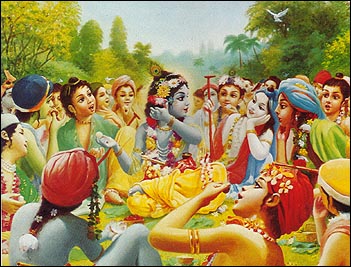
And then we become even more advanced and we go back to Godhead. There we see the direct reciprocation. Krishna says, “Let’s see what you have in your plate. Oh! It looks so nice! Please give it to Me?” And Krishna takes that from me, and then I say, or you say rather that, “Oh, Krishna, what is that in Your plate?” Krishna: “Want to have it? Come take it.” Krishna gives it to you from His plate. So this is how Krishna directly reciprocates. Krishna sees you and says, “Oh, My friend! I am so happy to see you!” And Krishna embraces you. This is how Krishna directly reciprocates.
So there will be different levels of reciprocation or perception of reciprocation according to our spiritual advancement.
SRIMAD BHAGAVATAM CANTO 3, CHAPTER 9, BRAMHA´S PRAYERS FOR CREATIVE ENERGY, TEXT 23, WAS GIVEN BY HIS HOLINESS BHAKTI CHARU SWAMI IN ISKCON UJJAIN, INDIA, ON 10 FEBRUARY 2009.
How a surrendered soul thinks ..
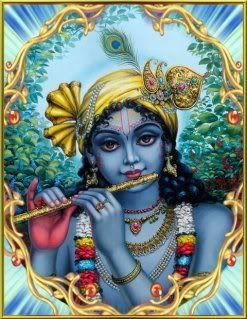
A person who is surrendered he never takes credit for anything. That is the meaning of being surrendered. When we want to take credit that means that we are not surrendered. “I have done this! I have done this!” But a surrendered soul, how will he think? “Somehow I got this opportunity to do this job, but he, my master, has provided me with all the facilities.” Like, I was talking about that person from America, who came to India to set up a big project for a big company. Now he’ll naturally think that, “I am simply an employee,” He is not thinking that, “I am the creator of this project.” “I am an employee. The company sent me here. The ticket to come to India was given by the company. When I came people were there to receive me, they took me to the hotel. That hotel was also booked by the company. Then I started the project, all the money came from the company, and that is how I have been able to do it.” Or if he thinks that, “Well, I have done this, so I am the enjoyer”, then what will happen? Then what will happen? Immediately the company will kick him out. They’ll say, “You rascal! You think that you are the proprietor. Get lost!” [laughs] So that’s what happens in the material nature also in a bigger sense. The moment we think that we are the proprietor, then Krishna kicks us out and says, “Okay, now you are on your own. Do it! Let’s see.” And we try to enjoy, what do we get when we try to enjoy? When we try to enjoy we get the sufferings inflicted by maya: “Oh, you want to enjoy?!” So maya just keeps beating us again and again, whereas a surrendered soul he becomes dear to Krishna.
- HH Bhakti Charu Swami
Tuesday, 20 March 2012
Influence of the Illusory Energy
Materialistic person is a person who is entangled by the influence or affected by the influence of the material nature or the illusory energy of the Lord. And what does the illusory energy do?
The illusory makes him think that he is the greatest and that is the meaning of material conditioning. He thinks everyone in this material nature thinks that he is the greatest. Why? Because his consciousness is projected towards the material nature, which is the external energy of the Lord, inferior energy of the Lord whereas he is coming from the superior energy of the Lord. Jiva is coming from the superior nature and material nature is inferior.

Now although a living entity is minute but because he comes from the superior nature of the Lord, he thinks that this material nature is meant to lord over. Because whatever he sees is material, even the living entities, even the Supreme Personality of Godhead, he sees in a material way. The deity of the Lord he sees as stone or wood or metal. Just a statue, but I am greater, I am conscious, I am capable of doing so many things. But this statue, what can he do? It’s just standing there. Some fools have installed him and worship him. That is the materialistic people’s understanding. They see the greatest person, he thinks, “Oh, I am greater than him.” It’s only matter of time. Bill Gates, just give me a few years. I will become bigger than Bill Gates. He thinks he is the most handsome, most beautiful. He thinks that, he may be the most ugly personality, but he thinks he is the most handsome and he thinks that everything in this world is meant for his enjoyment. That is the meaning of the illusory energy of the Lord. On the other hand, when one takes to Krishna consciousness he begins to see that Krishna is the greatest and in the light of that he recognizes his position to be absolutely insignificant. And the more he comes closer to Krishna or the more he becomes Krishna conscious, the more humble he becomes.
- HH Bhakti Charu Swami :: May 2009
The illusory makes him think that he is the greatest and that is the meaning of material conditioning. He thinks everyone in this material nature thinks that he is the greatest. Why? Because his consciousness is projected towards the material nature, which is the external energy of the Lord, inferior energy of the Lord whereas he is coming from the superior energy of the Lord. Jiva is coming from the superior nature and material nature is inferior.
Now although a living entity is minute but because he comes from the superior nature of the Lord, he thinks that this material nature is meant to lord over. Because whatever he sees is material, even the living entities, even the Supreme Personality of Godhead, he sees in a material way. The deity of the Lord he sees as stone or wood or metal. Just a statue, but I am greater, I am conscious, I am capable of doing so many things. But this statue, what can he do? It’s just standing there. Some fools have installed him and worship him. That is the materialistic people’s understanding. They see the greatest person, he thinks, “Oh, I am greater than him.” It’s only matter of time. Bill Gates, just give me a few years. I will become bigger than Bill Gates. He thinks he is the most handsome, most beautiful. He thinks that, he may be the most ugly personality, but he thinks he is the most handsome and he thinks that everything in this world is meant for his enjoyment. That is the meaning of the illusory energy of the Lord. On the other hand, when one takes to Krishna consciousness he begins to see that Krishna is the greatest and in the light of that he recognizes his position to be absolutely insignificant. And the more he comes closer to Krishna or the more he becomes Krishna conscious, the more humble he becomes.
- HH Bhakti Charu Swami :: May 2009
How to Recognize a Devotee?

It’s very difficult to recognize a devotee. A devotee cannot be recognized from materialistic point of view. We cannot judge a devotee by his appearance, by his wealth, by his fame, because all these are external, material considerations. In order to recognize a devotee we have to go within the heart and we have to recognize the love that he has for Krishna. That is the only consideration, the only recognizable factor in a devotee: how much love he has for Krishna. Sometimes in ISKCON we fail to recognize very exalted devotees. Even in a Vaishnava community we see that we fail to recognize very exalted devotees, because we tend to judge people. We judge even the devotees from materialistic point of view – how big a position he has. We try to judge him according to position, we try to judge him according to his material assets, wealth. Therefore Srila Prabhupada used to say, “Don’t try to see a devotee with your eyes. The only way you can recognize a devotee, the only way you can see a devotee is through your ears. Try to see a devotee through your ears and if at all you have to see a devotee through your eyes, then try to see how attached he is to Krishna. How selflessly he is rendering his service to Krishna that is the main consideration for a devotee. How much he is doing for Krishna.”
Wednesday, 15 February 2012
Vedic Culture is Spiritual Culture
matr-bhaktih para-strisu
patnyam ardha ivatmanah
prajasu pitrvat snigdhah
kinkaro brahma-vadinam
TRANSLATION: The King will respect all women as if they were his own mother, and he will treat his own wife as the other half of his body. He will be just like an affectionate father to his citizens, and he will treat himself as the most obedient servant of the devotees, who always preach the glories of the Lord.
HH Bhakti Charu Swami: While describing the glory of Prthu Maharaja in this way they came to this
point. These four points: Respect for women, for householder, treating his wife as the other half, treating the citizens as his own children and respect for the brahmanas and Vaisnavas - devotees of the Lord - these are
the very foundation of Vedic culture. Vedic culture has been established, has been given by Krishna Himself. It is not any culture of any particular place as such. It is the spiritual culture to uplift the spirit soul to the spiritual platform freeing himself from the bondage of matter. In the material nature everyone is bound.
Material nature is a prison house and the shackles with which the living entities are bound in this material nature is sex desire. Therefore this material nature is described as maithunya-agara or prison house of sex desire. The Vedic culture actually teaches on how to transcend, how to free oneself from that entanglement, how to free oneself from this shackles that is binding him into this material nature.
As I was explaining earlier why I selected this verse. It is because I felt this verse is giving a very, very clear understanding of how the leaders should conduct themselves and how the leaders must train their followers.
The first principle is respect for women. It is the respect for women that builds ones character. The Bengali expression for a debauchee is characterless, caritahi. Carita means character and hina means devoid of. So
one who is a debauchee doesn't have any character. In order to develop ones noble character - in order to develop nobility in one's self one must learn, one must be trained to respect women. How? Like a mother. Actually all of us are most indebted to our mother. It is because of her we are here. She underwent so many difficulties, so many trials and tribulations, so much suffering just to bring us into this planet. And it is due to her care that we actually grew up, we developed this body and the body grew. That is why the respect for mother naturally grows and she is the ideal woman. So matr-bhaktih para-strisu. This kind of respect one should have towards all the women.
Then when he gets married he should treat his wife not as an object of sense gratification. What to speak of other women - he doesn't even treat his dually married wife also as an object of sense gratification. He treats his wife as his other half of his self, part of his self. That is another consideration that is another concept. A man, what to speak of considering other women as objects of sense gratification, he doesn't even treat his wife as an object of sense gratification. He has some responsibilities in this nature. A householder therefore gets married - putrarthe kriyate bharya. Why does one get married? In order to produce or procreate children - putrarthe kriyate bharya. Then he is saha dharmin - he conducts the same religion. He cannot perform religious activities himself alone. Therefore he needs his wife to be with him. When Lord Ramacandra banished Sita to the asrama of Valmiki whenever Lord Ramacandra would perform a yajna he had to have His wife with Him so a golden Sita was built and He conducted the sacrifice with ...Sita next to
Him. This is the Vedic culture - saha dharmin. In the one hand she is ardhangini and saha dharmini - half of his self and he conducts religious activities especially the activities that one conducts in the household life
along with her.
Then the third consideration is how should he treat his followers? Here they are talking about King Prthu. But King Prthu is actually an ideal leader. He is a king. Not that the king has the responsibility to treat his citizens as his own children but that is the responsibility of an ideal personality, an ideal leader. He must take care of them, guide them in their lives, take care of them. The word praja literally means someone who is specially born - that means he is his son but not born of him and his wife - children that are not born of
him but still they are his children. prakrsta-rupena jayate. So that is how a king must treat his citizens. That is how a leader must treat his followers.
Then kinkaro brahma-vadinam - although he is a king, although he is such an exalted personality he is an incarnation of the Supreme Personality of Godhead but he treats the devotees as his master and he places himself as their servant, kinkaro brahma-vadinam. The kings are so humble that they treat the devotees as their honourable master. "Please tell me what can I do for you?" Prabhupada mentioned this is a very common Vedic practice. Those days when an exalted personality came, when a sage or a devotee came to the palace of the king the king stood up from his throne and offered the throne to that person. We have seen that Krishna did that to Sudama. A brahmana came to Him. Krishna the Supreme Personality of Godhead is setting the standard. He made Sudama sit on His seat, on His throne and washed his feet. Washed his feet! So this is Vedic culture.

Srila Prabhupada came to establish or rather re-establish the Vedic culture in this planet when it is practically lost. We are seeing that the opposite things are happening now. Nobody looks up to women as mother. All over there is a massive propaganda to look at women as an object of sense gratification. Everywhere all they are showing is just women half exposed. There is no family life. Even when they get married then the marriage
doesn't last for very long. They break off. Very few marriages are lasting nowadays. To begin with they don't get married. Those who get married get divorced soon afterwards. What to speak of treating the subordinates as their own children, they don't even take care of their own children. And what to speak of having any respect for the exalted devotees of the Lord. They don't have any respect for anybody - a culture of disrespect.
The Vedic culture is established on sraddha, on respect and materialistic culture in the age of Kali is founded on disrespect. So this is the responsibility that we have as followers of Srila Prabhupada. We have to establish the Vedic culture - re-establish the Vedic culture. Why? Because this is the most important thing that is happening in this world. This is the most wonderful thing that is happening in this world today - revival of Krishna consciousness, revival of Vedic culture.
February 14th, 2012, Mayapur
Topic: Prayers of King Prthu by the Professional Reciters - Behaviour of a Leader
Verse: SB 4.16.17
Speaker: HH Bhakti Charu Swami
patnyam ardha ivatmanah
prajasu pitrvat snigdhah
kinkaro brahma-vadinam
TRANSLATION: The King will respect all women as if they were his own mother, and he will treat his own wife as the other half of his body. He will be just like an affectionate father to his citizens, and he will treat himself as the most obedient servant of the devotees, who always preach the glories of the Lord.
HH Bhakti Charu Swami: While describing the glory of Prthu Maharaja in this way they came to this
point. These four points: Respect for women, for householder, treating his wife as the other half, treating the citizens as his own children and respect for the brahmanas and Vaisnavas - devotees of the Lord - these are
the very foundation of Vedic culture. Vedic culture has been established, has been given by Krishna Himself. It is not any culture of any particular place as such. It is the spiritual culture to uplift the spirit soul to the spiritual platform freeing himself from the bondage of matter. In the material nature everyone is bound.
Material nature is a prison house and the shackles with which the living entities are bound in this material nature is sex desire. Therefore this material nature is described as maithunya-agara or prison house of sex desire. The Vedic culture actually teaches on how to transcend, how to free oneself from that entanglement, how to free oneself from this shackles that is binding him into this material nature.
As I was explaining earlier why I selected this verse. It is because I felt this verse is giving a very, very clear understanding of how the leaders should conduct themselves and how the leaders must train their followers.
The first principle is respect for women. It is the respect for women that builds ones character. The Bengali expression for a debauchee is characterless, caritahi. Carita means character and hina means devoid of. So
one who is a debauchee doesn't have any character. In order to develop ones noble character - in order to develop nobility in one's self one must learn, one must be trained to respect women. How? Like a mother. Actually all of us are most indebted to our mother. It is because of her we are here. She underwent so many difficulties, so many trials and tribulations, so much suffering just to bring us into this planet. And it is due to her care that we actually grew up, we developed this body and the body grew. That is why the respect for mother naturally grows and she is the ideal woman. So matr-bhaktih para-strisu. This kind of respect one should have towards all the women.
Then when he gets married he should treat his wife not as an object of sense gratification. What to speak of other women - he doesn't even treat his dually married wife also as an object of sense gratification. He treats his wife as his other half of his self, part of his self. That is another consideration that is another concept. A man, what to speak of considering other women as objects of sense gratification, he doesn't even treat his wife as an object of sense gratification. He has some responsibilities in this nature. A householder therefore gets married - putrarthe kriyate bharya. Why does one get married? In order to produce or procreate children - putrarthe kriyate bharya. Then he is saha dharmin - he conducts the same religion. He cannot perform religious activities himself alone. Therefore he needs his wife to be with him. When Lord Ramacandra banished Sita to the asrama of Valmiki whenever Lord Ramacandra would perform a yajna he had to have His wife with Him so a golden Sita was built and He conducted the sacrifice with ...Sita next to
Him. This is the Vedic culture - saha dharmin. In the one hand she is ardhangini and saha dharmini - half of his self and he conducts religious activities especially the activities that one conducts in the household life
along with her.
Then the third consideration is how should he treat his followers? Here they are talking about King Prthu. But King Prthu is actually an ideal leader. He is a king. Not that the king has the responsibility to treat his citizens as his own children but that is the responsibility of an ideal personality, an ideal leader. He must take care of them, guide them in their lives, take care of them. The word praja literally means someone who is specially born - that means he is his son but not born of him and his wife - children that are not born of
him but still they are his children. prakrsta-rupena jayate. So that is how a king must treat his citizens. That is how a leader must treat his followers.
Then kinkaro brahma-vadinam - although he is a king, although he is such an exalted personality he is an incarnation of the Supreme Personality of Godhead but he treats the devotees as his master and he places himself as their servant, kinkaro brahma-vadinam. The kings are so humble that they treat the devotees as their honourable master. "Please tell me what can I do for you?" Prabhupada mentioned this is a very common Vedic practice. Those days when an exalted personality came, when a sage or a devotee came to the palace of the king the king stood up from his throne and offered the throne to that person. We have seen that Krishna did that to Sudama. A brahmana came to Him. Krishna the Supreme Personality of Godhead is setting the standard. He made Sudama sit on His seat, on His throne and washed his feet. Washed his feet! So this is Vedic culture.
Srila Prabhupada came to establish or rather re-establish the Vedic culture in this planet when it is practically lost. We are seeing that the opposite things are happening now. Nobody looks up to women as mother. All over there is a massive propaganda to look at women as an object of sense gratification. Everywhere all they are showing is just women half exposed. There is no family life. Even when they get married then the marriage
doesn't last for very long. They break off. Very few marriages are lasting nowadays. To begin with they don't get married. Those who get married get divorced soon afterwards. What to speak of treating the subordinates as their own children, they don't even take care of their own children. And what to speak of having any respect for the exalted devotees of the Lord. They don't have any respect for anybody - a culture of disrespect.
The Vedic culture is established on sraddha, on respect and materialistic culture in the age of Kali is founded on disrespect. So this is the responsibility that we have as followers of Srila Prabhupada. We have to establish the Vedic culture - re-establish the Vedic culture. Why? Because this is the most important thing that is happening in this world. This is the most wonderful thing that is happening in this world today - revival of Krishna consciousness, revival of Vedic culture.
February 14th, 2012, Mayapur
Topic: Prayers of King Prthu by the Professional Reciters - Behaviour of a Leader
Verse: SB 4.16.17
Speaker: HH Bhakti Charu Swami
Saturday, 21 January 2012
How to become Humble?
Devotee: How to become humble?
Maharaj: Before coming to the ashrama your attitude towards the devotees were sentimental, somewhat sentimental. And now it is becoming practical. So there is a difference, that is because now you are seeing that from a distance when you looked at them it was so easy to look at everyone as pure devotees, address them as ‘prabhu’ and become prepared to do anything for them. But when you come close then you began to see that they have their defects, or their dealings sometimes are not that desirable. So whatever it is that you recognize, just as you are practicing to become a devotee, others are also practicing to become a devotee. So they may not be a pure devotee now but some day they’ll also become pure devotees. Just as some day you’ll also become a pure devotee. So be patient and tolerant. And I tell you the spiritual life is very, very purifying. It’s very purifying. I have seen with time how devotees change. Like, I remember when I joined there was one devotee who was so obnoxious. He was very difficult and nobody used to like him. Because he was so cantankerous, quarrelsome, proud, but now that devotee…actually, those days nobody wanted to associate with him but today everybody, he has become so pleasant that everybody loves him. So how did he change? Because he is practicing the process and the process is purifying. So the point is when you are in the association of devotees don’t be critical, but be tolerant and maintain a humble attitude. Yes, when you are close to them you will find many faults with them but at the same time you can consider if they have those faults, how many faults you have? That is how we should maintain our humble disposition and maintain our tolerance. That’s how you become humble, as you asked how to become humble.
- HH Bhakti Charu Swami
Maharaj: Before coming to the ashrama your attitude towards the devotees were sentimental, somewhat sentimental. And now it is becoming practical. So there is a difference, that is because now you are seeing that from a distance when you looked at them it was so easy to look at everyone as pure devotees, address them as ‘prabhu’ and become prepared to do anything for them. But when you come close then you began to see that they have their defects, or their dealings sometimes are not that desirable. So whatever it is that you recognize, just as you are practicing to become a devotee, others are also practicing to become a devotee. So they may not be a pure devotee now but some day they’ll also become pure devotees. Just as some day you’ll also become a pure devotee. So be patient and tolerant. And I tell you the spiritual life is very, very purifying. It’s very purifying. I have seen with time how devotees change. Like, I remember when I joined there was one devotee who was so obnoxious. He was very difficult and nobody used to like him. Because he was so cantankerous, quarrelsome, proud, but now that devotee…actually, those days nobody wanted to associate with him but today everybody, he has become so pleasant that everybody loves him. So how did he change? Because he is practicing the process and the process is purifying. So the point is when you are in the association of devotees don’t be critical, but be tolerant and maintain a humble attitude. Yes, when you are close to them you will find many faults with them but at the same time you can consider if they have those faults, how many faults you have? That is how we should maintain our humble disposition and maintain our tolerance. That’s how you become humble, as you asked how to become humble.
- HH Bhakti Charu Swami
Knowledge and Devotion

Question: Someone may have knowledge but if he doesn’t have faith in the knowledge, [inaudible] because you were saying just knowledge is not enough. So if someone really has knowledge and has faith in it, he will definitely execute it also. So if one doesn’t have faith then what he has done, studied or heard, can we really call it as knowledge?
BCS: Let’s go back to that example I gave, knowledge of food and eating food. If you really have the knowledge of food then you will eat when you are hungry. You understand? Knowledge of the food means knowing the characteristic of food: what is the purpose of food? But just knowledge alone of the food is not enough. How to cook the food is not enough. You have to know how to satisfy your hunger. That is the purpose of food.
Question: In other words if someone has genuine knowledge he is going to be a devotee.
BCS: Yeah, right, devotion automatically has knowledge. Devotion is the mother. Bhakti Devi is the mother and she has two children, Jnana and Vairagya, knowledge and detachment. The person who is situated in pure devotional service he is in full knowledge and he is also detached from everything material.
Question: If someone has a, I mean he is not yet a pure devotee, fully purified, but he is engaged in devotional service and he is experiencing the bliss of devotional service. Such a person, if he doesn’t cultivate knowledge at the same time side by side, so despite of being engaged in devotional service is it true that he can easily get distracted by other things?
BCS: Yeah. So, you see, at that stage of sadhana bhakti cultivation of knowledge is necessary. What you are saying is the stage of sadhana bhakti. He is not siddha. He didn’t achieve perfection but he is practicing. So when you are practicing, what you are practicing? You have to understand that. Certain degree of knowledge is, cultivation of knowledge is necessary. Like, why do we have Bhagavatam class? We are not saying just always render service. We have called a Bhagavatam class. We have Bhagavad Gita classes. We have other arrangements for cultivation of or understanding the spiritual life.
HH Bhakti Charu Swami :: Srimad-Bhagavatam, 3th Canto, Chapter 24, The Renunciation Of Kardama Muni, Text 36
Vaishnava Aparadhas

"In Krsna consciousness every man is so important because all of the activities of a devotee of Lord Krsna is beneficial to all living entities."
SP letter to Sivananda (June 15, 1969)
The Greatness of A Vaishnava
Quotes from Hari-Bhakti-Vilasa
1. Devotees of Hari are very rare in the age of Kali. The position of the devotee is more elevated than the position of Lord Brahma and Lord Rudra.
2. The presence of a devotee at the time of death elevates even the killer of a brahmana to the spiritual sky. (10.86)
3. If a dog-eater becomes a Vaishnava then he becomes more elevated than a brahmana, and if a sannyasi is devoid of devotion to Visnu then he considered to be more degraded than a dog-eater. (10.87)
4. Even at the time of total annihilation the devotees of Visnu do not fall down. That is why Sri Hari is known everywhere as infallible, all pervasive, and inexhaustible; therefore there is no need to fear a devotee. A devotee never inflicts pain on anyone. (10.101-105)
5. Those who worship the Supreme Personality of Godhead Sri Hari are the best of all people and no one is better than them in the three worlds. (10.110)
6. Those sinless, magnanimous Vaishnavas purify the entire creation therefore they are even better than the places of pilgrimage. (10.118)
7. Those who are My devotees are not actually My devotees, those who are My devotees of My devotees are real devotees. (10.133)
8. My devotees who are surrendered unto Me and free from attachment and disgust, envy and pride, sing My glory all the time. They never cause any harm to anyone. They are always engaged in worshipping My devotees and eager to hear about Me, they are the ones who always carry Me in their hearts. (10.145-146)
Blasphemy of a Vaishnava
You are always alert to see whether you are committing some offense. This is a very nice attitude. In rendering service to Lord Krsna and His representative, the Spiritual Master, we should always maintain this fearful attitude which means careful attention. This attitude will advance you progressively in Krsna consciousness.
SP letter to Gopala Krsna (April 21, 1970)
Quotes from Hari-Bhakti-Vilasa
1. When one blasphemes a Vaishnava he loses his religiosity, wealth, fame and children. (10.310)
2. If one beats a Vaishnava, blasphemes a Vaishnava, shows disrespect to a Vaishnava, gets angry upon a Vaishnava or does not express joy in seeing a Vaishnava, he goes to hell. (10.310)
Four Kinds of Blasphemy to a Vaishnava
1. To find fault with a Vaishnava for his apparent low birth.
2. To blaspheme him for his previous faults.
3. To blaspheme him for his accidental fault.
4. To blaspheme him for the faults that are almost rectified.
(from Harinama Cintamani)
What to Do If One Commits Vaishnava Aparadha
If by chance one commits Vaishnava aparadha then he must be forgiveness from the Vaishnava very earnestly holding his feet. A Vaishnava is very merciful so he will immediately embrace him and forgive him for all his offenses.
(from Harinama Cintamani)
Offering Praise to a Vaishnava
This is actually a devotee's business that everyone should appreciate the value of other devotees. Nobody should criticize anyone.
SP letter to Tamala Krsna (August 19, 1968)
Now that you have come to my house today, I have become glorified; my life has become completely successful. To be able to see a Vaishnava is as rare as the good fortune of seeing Sri Hari. I must have acquired immense piety, huge as the Meru mountain that's why I got to see a great Vaishnava like you."
Hari-Bhakti-Vilasa (10.337-338)
- Based on Vaisnava Etiquette Seminar by HH Bhakti Charu Swami
SP letter to Sivananda (June 15, 1969)
The Greatness of A Vaishnava
Quotes from Hari-Bhakti-Vilasa
1. Devotees of Hari are very rare in the age of Kali. The position of the devotee is more elevated than the position of Lord Brahma and Lord Rudra.
2. The presence of a devotee at the time of death elevates even the killer of a brahmana to the spiritual sky. (10.86)
3. If a dog-eater becomes a Vaishnava then he becomes more elevated than a brahmana, and if a sannyasi is devoid of devotion to Visnu then he considered to be more degraded than a dog-eater. (10.87)
4. Even at the time of total annihilation the devotees of Visnu do not fall down. That is why Sri Hari is known everywhere as infallible, all pervasive, and inexhaustible; therefore there is no need to fear a devotee. A devotee never inflicts pain on anyone. (10.101-105)
5. Those who worship the Supreme Personality of Godhead Sri Hari are the best of all people and no one is better than them in the three worlds. (10.110)
6. Those sinless, magnanimous Vaishnavas purify the entire creation therefore they are even better than the places of pilgrimage. (10.118)
7. Those who are My devotees are not actually My devotees, those who are My devotees of My devotees are real devotees. (10.133)
8. My devotees who are surrendered unto Me and free from attachment and disgust, envy and pride, sing My glory all the time. They never cause any harm to anyone. They are always engaged in worshipping My devotees and eager to hear about Me, they are the ones who always carry Me in their hearts. (10.145-146)
Blasphemy of a Vaishnava
You are always alert to see whether you are committing some offense. This is a very nice attitude. In rendering service to Lord Krsna and His representative, the Spiritual Master, we should always maintain this fearful attitude which means careful attention. This attitude will advance you progressively in Krsna consciousness.
SP letter to Gopala Krsna (April 21, 1970)
Quotes from Hari-Bhakti-Vilasa
1. When one blasphemes a Vaishnava he loses his religiosity, wealth, fame and children. (10.310)
2. If one beats a Vaishnava, blasphemes a Vaishnava, shows disrespect to a Vaishnava, gets angry upon a Vaishnava or does not express joy in seeing a Vaishnava, he goes to hell. (10.310)
Four Kinds of Blasphemy to a Vaishnava
1. To find fault with a Vaishnava for his apparent low birth.
2. To blaspheme him for his previous faults.
3. To blaspheme him for his accidental fault.
4. To blaspheme him for the faults that are almost rectified.
(from Harinama Cintamani)
What to Do If One Commits Vaishnava Aparadha
If by chance one commits Vaishnava aparadha then he must be forgiveness from the Vaishnava very earnestly holding his feet. A Vaishnava is very merciful so he will immediately embrace him and forgive him for all his offenses.
(from Harinama Cintamani)
Offering Praise to a Vaishnava
This is actually a devotee's business that everyone should appreciate the value of other devotees. Nobody should criticize anyone.
SP letter to Tamala Krsna (August 19, 1968)
Now that you have come to my house today, I have become glorified; my life has become completely successful. To be able to see a Vaishnava is as rare as the good fortune of seeing Sri Hari. I must have acquired immense piety, huge as the Meru mountain that's why I got to see a great Vaishnava like you."
Hari-Bhakti-Vilasa (10.337-338)
- Based on Vaisnava Etiquette Seminar by HH Bhakti Charu Swami
Yuga Dharma

harer nama harer nama harer namaiva kevalam
kalau nasty eva nasty eva nasty eva gatir anyatha
"'In this Age of Kali there is no other means, no other means, no other means for self-realization than chanting the holy name, chanting the holy name, chanting the holy name of Lord Hari.' (Brihad Naradiya Purana.3.8.126; Caitanya Caritamrita 17.21)
This is the yuga dharma for the age of Kali. For the four yugas (Satya, Treta, Dvapar and Kali) there are four Dharmas.
krte yad dhyayato visnum
tretayam yajato makhaih
dvapare paricaryayam
kalau tad dhari-kirtanat
Whatever result was obtained in Satya-yuga by meditating on Viṣṇu, in Tretā-yuga by performing sacrifices, and in Dvāpara-yuga by serving the Lord's lotus feet can be obtained in Kali-yuga simply by chanting the Hare Kṛṣṇa mahā-mantra.
(SB 12.3.52)
So Krte Yad dhyayato Visnum – In Satya yuga the process of deliverance was Meditation on the Lord. Does meditation mean sitting at one place and thinking of something or does it mean to make the mind vacant? To begin with, the mind’s business is to think, so how can we make it vacant and stop thinking? Yoga is not the process of this age (kali-yuga) and we can consider why it is not a process for this age.
Yoga beings with leaving home and going to a solitary place. That is the pre-requisite for practicing yoga. Even better to go to the forest and best is going under the water and meditating which is not possible for people of this age. This yoga process is known as Astanga Yoga. (Asta – Eight; Anga – limbs/stages). The eight stages are:
1. Yama: External Purification, not only to have a clean body, wearing clean clothes but this also involves eating only Krishna Prasad.
2. Niyama: Internal Purification by following the rules and regulations (Cleaning the mind from all undesirable thoughts and prepare your mind to be clean).
3. Asana: This does not mean some physical exercise. The purpose of asana is to utilize the body to reach the destination. For example, if you want to drive a machine, the first thing we have to do is sit properly in the right side. If we want to ride a plane, we have to sit in the cockpit and not in economy class seat and then we have to know how to ride the plane or if we want to ride a bicycle, we have to be seated in a proper position and should know how to use the machine in order to reach the destination. Similarly, this body is a machine. Yantra rudhani mayaya (BG 18.61). Yantra means machine, arudhani means to ride. So this human body is a very special machine, because when we get this machine, we can reach our ultimate destination, the spiritual sky, Goloka Vrindavan. In order to do that, we have to learn how to ride this machine.
4. Pranayama: Prana is actually the air which keeps the soul within the body. These airs control different activities. Don’t we say the prana left, when somebody dies? So when the pranavayu left the body, it means the soul left. This Prana is synonomous to our breathing. Generally we think breathing consists of inhale and exhale. But Vedic understanding says there are 3 functions: inhale, exhale and retain. So the practice of yoga (umbaka) is actually meant to retain the life air within the body. The Purpose of pranayama is to retain life air within and stop inhaling and exhaling. This practically means to stop breathing by retaining the air.
5. Pratyahara: When the yogis stop breathing, then they are able to withdraw their senses from the sense objects. What do the senses do? The senses are constantly running towards the objects of the senses. Then as a result one develops attachment for them.
dhyāyato viṣayān puḿsaḥ sańgas teṣūpajāyate
sańgāt sañjāyate kāmaḥ kāmāt krodho 'bhijāyate
krodhād bhavati sammohaḥ sammohāt smṛti-vibhramaḥ
smṛti-bhraḿśād buddhi-nāśo buddhi-nāśāt praṇaśyati
While contemplating the objects of the senses, a person develops attachment for them, and from such attachment lust develops, and from lust anger arises. From anger, complete delusion arises, and from delusion bewilderment of memory. When memory is bewildered, intelligence is lost, and when intelligence is lost one falls down again into the material pool. (Bhagavad Gita 2.25-63).
So the yogi at that stage, he withdraws the senses from the sense objects. That means the eyes will be open, but the eyes will not register anything he sees. Sound will be there, ears will not register because we are not running to the sense objects anymore.
6. Dhyana: Then begins dhyana. When our senses are withdrawn from the sense objects, only then we are eligible to meditate. Otherwise everybody is meditating, but the problem is they are meditating on material objects like money, family etc but this Astanga-yoga is meant for meditating on the Supreme Lord. Where is the Supreme Personality of Godhead? Isvarah sarva bhutanam hrd-dese arjuna tisthati - He is seated in everyone's heart. (BG 18.61)
7. Dharana: This stage means focusing on the Supreme Personality of Godhead present in the heart and then when meditation is fixed that is called Dharana.
8. Samadhi: When one perceives the Supreme Lord in the heart, that is called Samadhi.
So this is astanga-yoga system. This is not only possible for us but it was not possible for people in treta yuga so Krishna devised the process of sacrifice.
Tretayam yajato makaih. This means sacrifice, yajna. Does sacrifice mean pouring some ghee in fire? Sacrifice really means giving up - for whom? For Krishna. This is for Krishna , this is not for me. This is how one used to reach to the point of realizing that even I belong to Krishna. My money is for Krishna. My children are for Krishna. My family, home whatever I have is for Krishna. Then finally even I belong to Krishna. That is the perfection of sacrifice in everything.
But in Dvapara people lost that ability to do that therefore Krishna introduced another process, Dvapare Paricaryayam – worship the Lord in the temple. That worship also was very elaborate. That we can see in ISKCON temples, although it has been simplified to a great extent, but we can see how difficult the process is. So temple worship includes getting up early in the morning at 3:30 AM, then take bath, then make arrangements for the Lord to wake-up. There were atleast 6 Arati's and we have to offer to the Lord 56 Bhogas. That is the process for Dvapara yuga.
In Kali-yuga we lost the ability to even worship the Lord properly, therefore the Lord gave a very simple process – yajnaih sankirtana prayair; yajanti hi su-medhasah – Those who are intelligent will worship Him through this chanting. (Srimad Bhagavatam 11.5.32).
Now just consider, to chant the holy name do we have to go to a forest? To chant the Holy Name do we have to perform sacrifice? To chant the Holy Name, do we have to visit a temple? No. We are all working and still practicing Krishna Consciousness and chanting the Holy Name. This way we can see, in this age of Kali-yuga, it is so simplified.
So this is how Krishna works. Krishna wants us to go back to Godhead. If the son goes away from the father, does the father make him feel very criticial and closes the doors for the son to return? No, the father will make all arrangements for the son to come back. Krishna is the Supreme Father and we are all His sons. That is the difference between Christianity and Krishna Consciousness. In Christianity, they think God has only one son but in Krishna Consciousness we have the clear understanding that not only human beings but every living entity is the son of God.
Therefore we see that as we are losing the ability to re-establish our relationship with Krishna, Krishna, the Supreme Personlaity of Godhead is making it easier for us. As we are becoming dull, incapable and diseased, the Lord is making the process easier and simpler so that everybody can benefit and go back to Godhead.
In other ages, we had to make elaborate arrangements. Eg: When Yudhistar Maharaj decided to perform Rajasuya Yajna, he sent Bhima, Arjun, Nakul and Sahadeva to four different directions to bring all the wealth to perform the sacrifice, bring so many qualified brahmanas and also to perform sacrifices we need pure ghee from cows. Then in Dvapara yuga we need to go to the temple where the deities of the Lord are there. But the chanting of Holy Name of the Lord can be performed by anyone, anywhere and just by hearing the Holy Name, people get purified. It is the perfect arrangement to help all living entities.

- Lecture of His Holiness Bhakti Charu Swami Maharaj :: Damodardesh 20.01.2012
Wednesday, 18 January 2012
Why did Lord Kapiladeva Come?
Why did Lord Kapiladeva come ?

He came to give transcendental knowledge to the misguided conditioned souls. The living entities lost the
understanding of Krishna. There was no way the people could actually understand the Supreme Personality of Godhead because they became very, they became very philosophically inclined, very mental, intellectually.
So Kapiladeva came and through this intellectual endeavor He made them understand God. You are saying God, you don’t, you are not interested in God because you cannot see Him, okay come, I’ll prove that God is there. So, that’s what Kapila did through Sankhya philosophy. If you want to, philosophy means, trying to understand things with your mental ability, intellectual ability. Philosophy means, philosophy is the process of
understanding things with your own ability, with your own perception, with your own intellect. Therefore, they come up with different ideas, because different people have different perceptions. But Kapiladeva came through that process, through that process of assimilating knowledge, come to the conclusion that the Lord is there.
And what is the conclusion, okay analyze the entire material creation the entire material world has been analyzed. The other day we discussed, how many of you remember ? With how many elements the material, how many considerations, the entire material creation has been analyzed ?
Devotees: twenty four
HH BCS : So tell me how, what are those twenty four ?
Devotee. Earth, water, fire, air, ether, then five senses, then sense objects.
HH BCS : How many ?
Devotee?. Fifteen
HH BCS : No, sense objects is how many ?
Devotee…. five
HH BCS : Okay, fifteen, okay, then ? Five working senses! How many ?
Devotee: five
HH BCS : Okay, fifteen ? Okay, then ? Five working senses, how many ? Twenty, okay, then ?
Devotee : Then, mind, intelligence, false ego.
HH BCS : Twenty three
Devotee : Twenty three
HH BCS : And then ?
Devotee…. Mahattatva
HH BCS : Twenty four, entire material nature has been analyzed.
But where were you ? (laughs) That’s what Kapila, that is, the point is, He is raising, okay the whole material nature has been analyzed, but the material, this is being experienced by whom ? By the individual. So where is the individual ? Could He find the individual in the material nature ? No.
So, where is he found ? Beyond material nature. So, individual, therefore is non material. So, we see that how they transcended the material nature and came to the spiritual platform. Then, we all are individuals. So, do we have an origin ? So who is the origin of all individuals? Krishna. So, twenty six. So, Krishna is established. Ok, so that is the real sankhya. So, in this way, Kapiladeva made even the atheistic people recognize the existence of the Supreme Personality of Godhead.
In the mode of goodness, people tend can become too much involved in, in austerities and pious, piety for their personal elevation. So that is also another mistake. Like, forgetting Krishna they are trying to enjoy themselves, elevating to the heavenly planets. When you read the scriptures, you see specially Ramayan, you see all these sages were performing such severe austerities just to become elevated to the heavenly planets. Hardly anyone was actually pursuing devotional service. So,that means they were in mode of goodness but they were not involved in devotional service so Kapiladeva came and gave them the process of devotional service.
- HH Bhakti Charu Swami SRIMAD-BHAGAVATAM, CANTO 3, CHAPTER 33, ACTIVITIES OF KAPILA, TEXT 5 :: October 2011
He came to give transcendental knowledge to the misguided conditioned souls. The living entities lost the
understanding of Krishna. There was no way the people could actually understand the Supreme Personality of Godhead because they became very, they became very philosophically inclined, very mental, intellectually.
So Kapiladeva came and through this intellectual endeavor He made them understand God. You are saying God, you don’t, you are not interested in God because you cannot see Him, okay come, I’ll prove that God is there. So, that’s what Kapila did through Sankhya philosophy. If you want to, philosophy means, trying to understand things with your mental ability, intellectual ability. Philosophy means, philosophy is the process of
understanding things with your own ability, with your own perception, with your own intellect. Therefore, they come up with different ideas, because different people have different perceptions. But Kapiladeva came through that process, through that process of assimilating knowledge, come to the conclusion that the Lord is there.
And what is the conclusion, okay analyze the entire material creation the entire material world has been analyzed. The other day we discussed, how many of you remember ? With how many elements the material, how many considerations, the entire material creation has been analyzed ?
Devotees: twenty four
HH BCS : So tell me how, what are those twenty four ?
Devotee. Earth, water, fire, air, ether, then five senses, then sense objects.
HH BCS : How many ?
Devotee?. Fifteen
HH BCS : No, sense objects is how many ?
Devotee…. five
HH BCS : Okay, fifteen, okay, then ? Five working senses! How many ?
Devotee: five
HH BCS : Okay, fifteen ? Okay, then ? Five working senses, how many ? Twenty, okay, then ?
Devotee : Then, mind, intelligence, false ego.
HH BCS : Twenty three
Devotee : Twenty three
HH BCS : And then ?
Devotee…. Mahattatva
HH BCS : Twenty four, entire material nature has been analyzed.
But where were you ? (laughs) That’s what Kapila, that is, the point is, He is raising, okay the whole material nature has been analyzed, but the material, this is being experienced by whom ? By the individual. So where is the individual ? Could He find the individual in the material nature ? No.
So, where is he found ? Beyond material nature. So, individual, therefore is non material. So, we see that how they transcended the material nature and came to the spiritual platform. Then, we all are individuals. So, do we have an origin ? So who is the origin of all individuals? Krishna. So, twenty six. So, Krishna is established. Ok, so that is the real sankhya. So, in this way, Kapiladeva made even the atheistic people recognize the existence of the Supreme Personality of Godhead.
In the mode of goodness, people tend can become too much involved in, in austerities and pious, piety for their personal elevation. So that is also another mistake. Like, forgetting Krishna they are trying to enjoy themselves, elevating to the heavenly planets. When you read the scriptures, you see specially Ramayan, you see all these sages were performing such severe austerities just to become elevated to the heavenly planets. Hardly anyone was actually pursuing devotional service. So,that means they were in mode of goodness but they were not involved in devotional service so Kapiladeva came and gave them the process of devotional service.
- HH Bhakti Charu Swami SRIMAD-BHAGAVATAM, CANTO 3, CHAPTER 33, ACTIVITIES OF KAPILA, TEXT 5 :: October 2011
Wednesday, 4 January 2012
Do you have any Desires?

Devotional service has 3 stages:
Sadhana bhakti - Devotional Service in Practice
Bhava bhakti - Devotional Service in Ecstacy
Prema bhakti - Loving Devotional Service (this is Pure Devotional Service). Rendering service to Krishna, simply out of love for Him.
Bhakti is pure but it depends on the execution of the devotee. As long as there are other desires, it is not pure. The question is whether we are executing pure devotional service or mixed devotional service. Pure devotional service is rendered by the pure spirit soul and body is the medium. In our conditioned stage, we become entrapped because we are identifying ourselves with the body and mind, since our identity is with the gross and subtle body, but a time will come when we transcend the gross and subtle body. Then the body wil also become spiritual. A pure devotee's body is also pure. Prabhupada gives the example of iron and fire. When iron becomes red hot it is also like fire. A pure devotee's body although made up of matter, but becuase of being in contact with the spirit, the body is spiritual.
Question by a Devotee: How much minimum spiritual service does a jiva have to perform to guarantee a human body in next life or to get transferred back to Krishna? How do we understand ourselves?
Answer by HH Bhakti Charu Swami Maharaj: Just continue service with all sincerity. What really matters is no other desire, but to please Krishna. With that attitude serve Krishna and then Krishna will not only be pleased but will be indebted and He will think - This devotee has done so much for me, how will I be able to repay his debt. Krishna becomes indebted when we render service without personal motovation. Personal motivation means that we render service to Krishna but back of the mind we have personal motives. Eg. We render service to get position. So, we cannot hide our intentions from Krishna. What is required is anyabhilasita sunyam - free from any other desire besides serving Krishna. When we render service with that attitude, no matter how insignificant that service will be, Krishna will reciprocate and He will decide that whether to give you a human body in the next life if your devotional process is incomplete or if you have pleased Krishna, then He may call you back home and may give a spiritual body. So, Test yourself - do you have any desires?
Question from Devotee: What is neophyte Stage?
Answer from HH Bhakti Charu Swami Maharaj: Neophyte stage is serving Krishna in order to become free from misery which means desire from liberation but pure devotional service is even free from desire for liberation. One characteristic of pure devotional service is moksa-laghutakrt which means even liberation becomes very insignificant.
- From HH Bhakti Charu Swami Lectures :: 2009
How to Love Krishna?

Question by Devotee: When we talk of love, we need a person who we can see, touch, talk and get responses but we cannot see Krishna, cannot touch Him or get any reciprocation, so how to love Krishna?
Answer by HH Bhakti Caru Swami Maharaj: There are two terms : Sense Gratification and Spiritual Reciprocation.
Sense gratification - I can touch, see, talk but all that is centered around sense perception but beyond that is the consciousness. Our consciousness now in the conditioned stage is flowing through the body and so sense perception bceomes important. But beyond sense perception is the spiritual reality. I can talk to somebody, touch somebody - yes you can also have that same relationship with Krishna but you have to follow the spiritual process. Spiritual life is absolute reality. Krishna is real but we have lost the ability to realize him. Just like a blind man cannot see the sun, but that doesnt affect the sun. It is the blind's man fault that he cannot see the sun and there is a cure for the disease. When the blindness is cured then he can see the sun and along with will come all kinds of enjoyment.

Question by Devotee: Is it wrong to pray for well-being of parents, relatives and everyone as this might be considered as having a desire?
Answer by HH BHakti Charu Swami Maharaj: There is nothing wrong because just like Krishna is grateful, a devotee is also grateful. Just like Dhruva Maharaj, when he was going back to Vaikuntha, he asked about his mother who laid him on this path and felt how can he go without his mother and then he was pointed out that his mother is already going in another chariot. Eevn Prahlada Maharaj told Lord Narsinghadeva to bless His father although he was a demon. So, a devotee prays for the well-being everybody. For eg, Vasudeva Datta prayed to Chaitanya Mahaprabhu to take everybody's sins on Himslef and he wanted that everybody should go back to Krishna.
The Real Object of Love - Krishna!

In this material nature, people don't know what love is and who is the real object of Love. The real object of love is krishna and until the love is not reposited to Krishna, the heart is not satisfied and when we offer to Krishna, the heart is satisfied. Despite material civilization, people are not happy becuase they miss on the main point - who to love? they want to love somebody and want to be loved but all that ends in frustration because we don't know who to love!
Bhakti means love for Krishna, the Supreme Personailty of Godhead. Krishna consciousness is not a sentiment but is a science. What goes on in the name of religion now-a-days is blind faith without any logiocal explanation. Eg, people think I am Christian,Hindu because I am born in such a family and in most cases they are not open to any other idea. That is the problem with faith - I believe in it no matter what it is but Krishna Consciousness is not a faith but it is a science. Faith changes easily but science is verifiable, applicable at all times and is not a concoted idea but deals with facts. This Krishna Consciousness is not a faith only but a science which gives a scientific understanding of the spiritual reality.
So, Prabhupada is appealing to such confused men to learn the art of devotion through the nectar of devotion. We sould not reject anything, but simply accept Krishna as the object of love. Whatever you may be, you don't have to change your position but simply bring Krishna in your life and offer your love to Him.
- HH Bhakti Charu Swami :: 2009 Lecture
Thursday, 29 December 2011
Vaisnava Ettiquette - Part 1
1. Preaching accompanied with Vaishnava etiquette: We have to push forward this movement, and we may get caught up in the activities of pushing, and forget about Vaishnava etiquette. However, there is an exchange between Srila Sanatana Goswami and Haridas Thakura in which Srila Sanatana Goswami praises Haridas: (Cc Antya 4.102-3)
apane acara keha na kare pracara pracara karena keha na karena acara
“Some behave very well but do not preach the cult of Krishna consciousness, whereas others preach but do not behave properly.”
acara pracara namera karaha dui karya tumi sarva guru tumi jagatera arya
“You simultaneously perform both activities in relation to the Holy Name by your personal behavior and by your preaching. Therefore you are the most advanced devotee in the world.”
2. Basics must always be stressed: The basic activities are listed by Srila Rupa Goswami in Nectar of Instruction (see BCS’s transcript). “Practicing Vaishnava etiquette means always acting in the mode of goodness, which is a stepping-stone to the transcendental plane. The mode of goodness is conducive to self-realization, whereas ignorance and passion are not. Therefore, how one applies the principles of Vaishnava etiquette reflects whether a devotee is Krishna conscious or not: i.e., is he humble? Conscientious? Well-mannered? Disciplined? cultured? Sensitive? Someone who is actually a devotee will be known by how much he displays the good qualities.”
3. One major component in Vaishnava etiquette, humility: One of the main parts of Vaishnava etiquette is humility. It is considered so important that Lord Krishna lists it as the first part of knowledge in Bhagavad-Gita (amanitvam). Some quotes from Srila Prabhupada: To Patita Uddharan (12/12/74) “So we all have to cooperate amongst ourselves, otherwise what will people think if we ourselves fight with one another? A devotee is always ideal in behavior.” SP Letter to Gargamuni 2/5/69 “Your humble repentance is just like a Vaishnava student, so I thank you very much for this humbleness. Lord Chaitanya taught us to be humbler that the grass on the street and more tolerant that the tree. So these symptoms are Vaishnava symptoms.” *** SP Letter to Dindayal 2/2/70 “Krishna is so very merciful to those who are very humble in their attitude engaged in service of the Lord. Lord Chaitanya advised, therefore, one should be humbler than the straw and more tolerant than the tree and thus be seriously engaged in glorifying the Lord. This world is very awful. Anyone is ready to create some disturbance; especially they are very much apt to disturb Krishna Consciousness persons because that is the way of demoniac life. So, in order to protect us from all dangerous elements, we have to chant the Hare Krishna Mantra regularly being humbler than the straw and more tolerant than the tree. Then Krishna, Who is Dina-Dayal, will bestow His Mercy upon us.” *** SP Letter to 8/18/70 Upendra “You are good for everything but your attitude to remain good for nothing is very nice. A Vaishnava is always humble and meek, and he is never puffed-up, even he has got the highest qualities of demigods.”
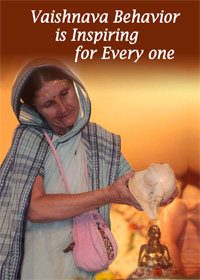
4. Vaishnava Behavior is Inspiring for Everyone
SP Letter to Janardan (1/21/68) Humbleness is appreciated
SP Letter to Shivananda (9/14/68) “This Krishna consciousness movement through music, philosophy, spiritual culture, and personal behavior culminating in ideal character of the devotees. All these heavenly contributions combined together will certainly bring about a major change in the life of Western people.”
SP Letter to Batu Gopal (2/1/75)
“You are right. We must all become ideal in character and then people will become very impressed with such purity. A devotee is faultless — he has no flaws.”
- HH Bhakti Charu Swami (Vaisnava Etiquette Seminar)
To be continued..
If you are in Difficulty, Chant the Holy Name!
If you are in difficulty, chant the Holy Name and see what happens!
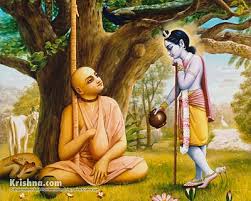
Difficulties will come and go but if you take shelter of the Holy Name, you will not only be protected from all kinds of calamities but you will make spiritual advancement. You will see how your heart is developing this intense love for Krishna and this love for Krishna is the ultimate goal of our lives, this love for Krishna is the ultimate goal of our life.
Sometimes there may be some difficulties but those difficulties are just apparent difficulties, they are not real difficulties, like the Pandavas, apparently they were facing so many difficulties, but were they facing the difficulties? No, they were having a good time. People may think that you having a difficulty but if you having a good time, like sometimes you go to the forest to have a picnic, the people may think oh look, they went to a place where there is no food, there is no home, no shelter but you were having a picnic in the forest, how do you feel? You feel wonderful, you feel so wonderful. So devotees, people may think that the devotees are going through difficulty but the devotees themselves don’t feel any difficulty.
Like for example in, in the west many of our devotees are coming from very wealthy background and when their friends and relatives come and see the devotees, how they live? You saw how the devotees live in the temple, like you are, you all are packed in, how many, 25 of you in one room, sleeping on the flour, no proper bed and they think oh they are suffering so much, they don’t have proper bed to sleep, there don’t, they are just eating vegetarian food, vegetarian food they think is just some dry, boiled vegetables and chapattis and they feel the devotees are suffering but are the devotees really suffering? Now that you all from the youth camp, you are living in this condition. Are you suffering or enjoying? But somebody will think that you are suffering. You don’t have proper bed to sleep, right? You don’t have any entertainment, you can’t go to movies, you can’t have non vegetarian food, but you know how you are enjoying? So where does the real enjoyment lie? Does the real enjoyment is the consideration of our external situation or the real enjoyment is the condition of our heart?
Real enjoyment is actually a state of heart, if the heart is happy then we are happy, if the heart is not happy externally, whatever situation may be there, you won’t feel happy. Somebody may be living in a palace but if he is suffering from a serious disease say cancer, how will he feel? Will be miserable, although he is externally living in a palace, has so many facilities, he has so much money but he himself is suffering. On the other hand you may live in a very apparently difficult situation, but internally if you are happy, then that is what real happiness is.

- Prabhupada demonstrated that very wonderfully. In the early forties during the second world war, there was a threat of bombardment, there was a threat of bombardment in, in Calcutta, the Japanese were supposed to bomb Calcutta because Calcutta was the big, strong hold of the British. So Japanese were supposed to bomb Calcutta and at that time everybody started to evacuate from the, evict the city vacate the, vacate, run away from the city, every body was running away from Calcutta. Prabhupada was in Calcutta at that time. What did Prabhupada do? Prabhupada took a Mridanga and went out on the street, and stated to chant the Holy Name. And Prabhupada’s point was, Prabhupada’s understanding was that if I chant the Holy Name then Krishna will give me protection and if I have to die, if the bomb drops and if I die then I will go back to Godhead because if I die chanting the Holy Name, so both way it is beneficial either Krishna will protect or if Krishna doesn’t protect or if I die, then by, if I chant the Holy Name and I die chanting the Holy Name then I will become delivered, right? So did the Japanese bomb Calcutta? No. What is the reason? No one knows that reason, not many people know that reason. Why the Japanese didn’t bomb Calcutta, they were all set to bomb Calcutta, specially the area where the fort was, the fort William, the British army’s strong hold. So why the British, why the Japanese in spite of all this preparation, did not bomb Calcutta, they were bombing everywhere, they didn’t bomb because Srila Prabhupada was chanting Hare Krishna. That is the real reason why the Japanese did not bomb Calcutta or Krishna protected Calcutta because Prabhupada was chanting the Holy Name. We can see in this way, the potency of the Holy Name.
- In the mid eighties communism collapsed in Russia, you know that? Before, before that Russia was communist country, but Krishna consciousness movement started to spread very effectively in Russia. It is because of the propagation of Krishna consciousness in Russia that communism collapsed and Russia became free. Russia became open. So this is the power of the Holy Name. Common people won’t understand that, a layman will not understand that, but we the devotees know and this is how our faith in the Holy Name will increase. Is it blind faith? No, it’s real, it’s very real. The proof is there. We hear so many such wonderful stories.
- Like one incident is, one girl in Europe was distributing Prabhupada’s books, she was a young girl, seven, eighteen, nineteen years old and then one drunkard attacked her, she was alone, there was nobody around and this huge man tried to attack her and she didn’t know what to do? It’s not that she didn’t know what to do? She knew what to do? What did the do? She just started to chant namas te narasimhaya prahladahlada-dayine and some thing happened to the man, he just turn around and went away.
- Another such incident is in, in Germany, in Hamburg our devotees used to go out on Harinaam, in, in a district, which is very notorious, that area is full of drunkards, but the devotees use to go out thinking that the most sinful people are the best candidates for receiving the mercy of Chaitanya Mahaprabhu, so they would go there and distribute in that area, chant the Holy Name in that area and that area is very active at night, because sinful people are active at night, they drink, night clubs and that place was full of night clubs called ripabaan and so devotees were chanting and one huge man, giant, he came charging towards them to attack them. Devotees didn’t know what to do, where they will go, because they were. behind them were the night club windows, showcase and they could have run but they didn’t do that, they just started to chant the Narasimha prayer namas te narasimhaya and the man who was running towards them, they could see he was coming a few feet from them and then something happened to the man, his body was lifted in the air and he fell. He was running and he just fell on the ground. First he jumped and then he felt and immediately, soon the paramedics came, the ambulance came and they checked him and they said that he had a massive heart attack, did he have a heart attack or Narasimha deva took care of him? So this is how the Lord takes care of him.
- Another time in France one man, very strong and powerful got drunk and he came to our temple and he tried to damage the temple, he was cursing the devotees but there was one devotee there in the temple room it was in the after noon, there was nobody in the temple room and this devotee he was not a very strong devotee. He was a pujari, skiny little devotee and this devotee did not care wether this person has a knife or a gun, he just went out to protect the Lord and although he was such a small person and this other guy was so big and so powerful, so strong, he literally bashed him up and threw him out of the temple and later on he told others that he doesn’t know, he couldn’t know, he didn’t know how he did that? He said that he didn’t even realize that he was doing, what he was doing? He, as if he was possessed by somebody and did that. So in this way devotees experience all kind of wonderful things.
Difficulties will come and go but if you take shelter of the Holy Name, you will not only be protected from all kinds of calamities but you will make spiritual advancement. You will see how your heart is developing this intense love for Krishna and this love for Krishna is the ultimate goal of our lives, this love for Krishna is the ultimate goal of our life.
Sometimes there may be some difficulties but those difficulties are just apparent difficulties, they are not real difficulties, like the Pandavas, apparently they were facing so many difficulties, but were they facing the difficulties? No, they were having a good time. People may think that you having a difficulty but if you having a good time, like sometimes you go to the forest to have a picnic, the people may think oh look, they went to a place where there is no food, there is no home, no shelter but you were having a picnic in the forest, how do you feel? You feel wonderful, you feel so wonderful. So devotees, people may think that the devotees are going through difficulty but the devotees themselves don’t feel any difficulty.
Like for example in, in the west many of our devotees are coming from very wealthy background and when their friends and relatives come and see the devotees, how they live? You saw how the devotees live in the temple, like you are, you all are packed in, how many, 25 of you in one room, sleeping on the flour, no proper bed and they think oh they are suffering so much, they don’t have proper bed to sleep, there don’t, they are just eating vegetarian food, vegetarian food they think is just some dry, boiled vegetables and chapattis and they feel the devotees are suffering but are the devotees really suffering? Now that you all from the youth camp, you are living in this condition. Are you suffering or enjoying? But somebody will think that you are suffering. You don’t have proper bed to sleep, right? You don’t have any entertainment, you can’t go to movies, you can’t have non vegetarian food, but you know how you are enjoying? So where does the real enjoyment lie? Does the real enjoyment is the consideration of our external situation or the real enjoyment is the condition of our heart?
Real enjoyment is actually a state of heart, if the heart is happy then we are happy, if the heart is not happy externally, whatever situation may be there, you won’t feel happy. Somebody may be living in a palace but if he is suffering from a serious disease say cancer, how will he feel? Will be miserable, although he is externally living in a palace, has so many facilities, he has so much money but he himself is suffering. On the other hand you may live in a very apparently difficult situation, but internally if you are happy, then that is what real happiness is.
- HH Bhakti Charu Swami Lecture - Srimad Bhagavatam 1.15.34
Tuesday, 22 November 2011
Remembering Krishna at the time of Death

We can remember Krishna only when we are sada tad bhava bhavitah. When one is simply thinking of Krishna all the time, sada. Then only he’ll be able to remember Krishna at the time of death. If one is thinking of anything else, people, we know the story of Ajamila. He was attached to his son, so much so that he remembered his son at the time of death. Our last thought will be where our deepest attachment is. Wherever your deepest attachment, that will be your last thought.
So we have to be very, very careful that our consciousness is in the right place. And if we practice properly throughout our lifetime at the time of death we will. And we are seeing it’s happening.
Just the day before yesterday one devotee in South Africa all of a sudden left her body. They went shopping from six, she was quite elderly, she and her husband. Many of you know probably, Harichandan and his wife, Rukmavati. Harichandan comes here quite often. Harichandan and his wife. She had some heart problem. They did shopping from six to nine, then, no I am sorry, three to six. Three o’clock to six o’clock. They did their shopping, then they came home. At seven o’clock they did their arotika and then they took some prasad. Now, when they were shopping she was actually telling him that she had a dream that Bhakti Devi came and told her to come with Her. And then at ten o’clock at night she was telling that she was feeling suffocation. She was finding it difficult to breathe. And she just told him, see, my time has come to go, I am going to go. And she just left. I mean, such a glorious way of… and apparently she is just an ordinary housewife. She is not a big sannyasi or big devotee. She was just a simple… but we are seeing how Krishna Consciousness Movement is benefitting people. How can one leave his body or her body in this way? She is having some difficulty and she is saying, well, my time has come for me to leave the body. Gone!

This is how Krishna consciousness helps. The real help will come at the time of death. And it’s a beautiful experience. To tell you frankly, like, when Prabhupada was in his final days, Prabhupada was totally bedridden as I told you many times. Prabhupada couldn’t even turn to his side. We had to help him to make him turn to his side when he wanted to. And sometimes Prabhupada used to say that, “Don’t think that this won’t happen to you.” What Prabhupada was going through, and Prabhupada was saying that it will happen to all of us. In this way Prabhupada actually taught us how to die, how to leave our body. And at that time, I mean, I heard the expression, Prabhupada saying that, but couldn’t understand it. But now I am seeing it, what happens when the body gets old. It doesn’t function the way it used to function before. And it will happen. Gradually it will become bedridden. Bedridden means the soul and the body will become separated gradually. And then finally the soul will leave the body and go.
So that is the arrangement of nature and we have to go along with that. But unfortunately what is happening nowadays, people do not want to accept death, do not want to accept old age, do not want to accept disease. They are trying to make all kinds of artificial arrangement. They are trying to find medicine so that they won’t get the disease. They are trying to make arrangements that they won’t become old. But it never happens. They become old, only, one doctor actually made a very wise statement the other day. He was telling, it was during the convention in South Africa. One doctor made that statement. He was invited to speak and he was telling, he frankly admitted, what modern medicine has been able to do is to prolong the suffering condition of the people. They have been able to simply prolong the suffering condition. The man was meant to suffer for five days and leave his body, but they are making the body to prolong for five years. And in these five years what is happening? The man is just suffering, prolong the suffering condition.
Okay, so that is the reality and we are very fortunate that Prabhupada gave us Krishna consciousness. So let’s take full advantage of it. There will be many hurdles. There will be many difficulties. There will be many obstacles. Don’t worry about that. Just recognize you got the most precious thing and go ahead with it.
- HH Bhakti Charu Swami Maharaj
Lecture on Srimad Bhagavatam 3.25.15
Sunday, 4 September 2011
Sign of a Devotee

(Above is Bali Maharaja who surrendered himself completely to Lord Vamanadeva)
So, what is the symptom of a devotee? How do you recognize a devotee? Do we recognize a devotee by his birth? By his material condition? By his material situation? No, the sign of a devotee is through his surrender to the Supreme Personality of Godhead. It doesn't matter from whatever category, whatever background one comes. Like candalo'pi dvija-shrestho hari- bhakti-parayanah. One maybe a candala but hari bhakti parayanah, when he becomes a devotee of Hari, Krishna , then he is dvija shrestha, he is superior, he is greater than a brahmana.
Here also we are seeing that so many devotees, as I just mentioned like they are born in a demoniac family. By birth they are demons, Prahlada Maharaja, Bali Maharaja, but why they have been recognized as great devotees, exemplary devotees? Because of their devotion to the Supreme Personality of Godhead. Therefore, it has been pointed out that vaishnavera nahi jati kuladi vicara. There is no consideration for jati, kula. Jati means caste and creed of a Vaishnava. Vaishnava can appear in any family.
What to speak of human beings, even an animal can become a devotee ofKrishna . A wonderful example is Hanumana. In the community of monkeys
there is Hanumana and there are so many other monkeys who are great devotees. The bird can be a devotee. Example is Garuda, example is Jatayu, example is Sampati. They are birds, but they are great devotees of the Lord.
So the Vedic Karma Kanda section may have consideration for caste and creed but when it comes to devotional service there is no such consideration. Because the devotional service is the activity of the soul, soul's activity. Now, the soul can, any soul at any place can become a devotee. But what is the criteria for becoming a devotee?When can one become a devotee, or when does one get the opportunity to become a devotee? That is the most important consideration. One can become a devotee only by coming in contact with a devotee. Without the contact of a devotee it is not possible to become a devotee. That is
why the devotional consideration is not of birth or any other criteria.
Yes, to be a brahmana generally one has to be born in a brahmanas family, generally. But that also is not sufficient. One may be born in a brahmana family but he has to practice as a brahmana. He has to become qualified. In our scriptures we find there are many…brahmanas, they actually were demons.
Here also we are seeing that so many devotees, as I just mentioned like they are born in a demoniac family. By birth they are demons, Prahlada Maharaja, Bali Maharaja, but why they have been recognized as great devotees, exemplary devotees? Because of their devotion to the Supreme Personality of Godhead. Therefore, it has been pointed out that vaishnavera nahi jati kuladi vicara. There is no consideration for jati, kula. Jati means caste and creed of a Vaishnava. Vaishnava can appear in any family.
What to speak of human beings, even an animal can become a devotee of
there is Hanumana and there are so many other monkeys who are great devotees. The bird can be a devotee. Example is Garuda, example is Jatayu, example is Sampati. They are birds, but they are great devotees of the Lord.
So the Vedic Karma Kanda section may have consideration for caste and creed but when it comes to devotional service there is no such consideration. Because the devotional service is the activity of the soul, soul's activity. Now, the soul can, any soul at any place can become a devotee. But what is the criteria for becoming a devotee?When can one become a devotee, or when does one get the opportunity to become a devotee? That is the most important consideration. One can become a devotee only by coming in contact with a devotee. Without the contact of a devotee it is not possible to become a devotee. That is
why the devotional consideration is not of birth or any other criteria.
Yes, to be a brahmana generally one has to be born in a brahmanas family, generally. But that also is not sufficient. One may be born in a brahmana family but he has to practice as a brahmana. He has to become qualified. In our scriptures we find there are many…brahmanas, they actually were demons.
Like Ravana, he is born of an exalted brahmana father, Vishrava. Hiranyakasipu, Hiranyaksa [born of] Kashyapa, son of Brahma. So, by birth they may be very exalted, but their activity is making them into demons. Whereas the devotion can be practiced by…but to receive, how can one become a devotee? The answer is only by coming in contact with a devotee. That is why it is important that the devotees go out and preach.
Preach means provide the opportunity to others to become a devotee.
(H.H Bhakti Charu Swami Maharaj)
(H.H Bhakti Charu Swami Maharaj)
--
Posted by Jyoti to www.gloriouskrishna.blogspot.com
(Visit the blog for unlimited nectarian articles on Krishna Consciousness)
Posted by Jyoti to www.gloriouskrishna.blogspot.com
(Visit the blog for unlimited nectarian articles on Krishna Consciousness)
Friday, 26 August 2011
Preparing for the Final Moment!

If we have developed proper attitude, if we have cleansed or purified our heart, if we have considerably detached ourselves from material attachments and detached ourselves from the propensity for sense gratification and if we have considerably maintained or advanced ourselves in spiritual lives, then at the time of death we will pass the exam, just like a good student who has prepared through out the year will pass the exam with flying colours. But a student who has gone to school but who doesn’t study properly, what happens to him?
Bhaktivinoda Thakura is saying, at the final moment he will be completely bewildered about how to face it as he didn’t prepare himself.
This Krsna Consciousness movement is meant to prepare ourselves for that final moment.
- HH Bhakti Charu Swami
Subscribe to:
Posts (Atom)